Table of Content
When Less Means More: Rethinking Productivity for Business in 2025
/>The Strategic Advantage of Stillness: How Organizations Can Win by Slowing Down, Protecting Focus, and Measuring Impact Over Output.When Less Means More: Rethinking Productivity for Business in 2025 How organisations can win by slowing down and resourcing what truly matters.
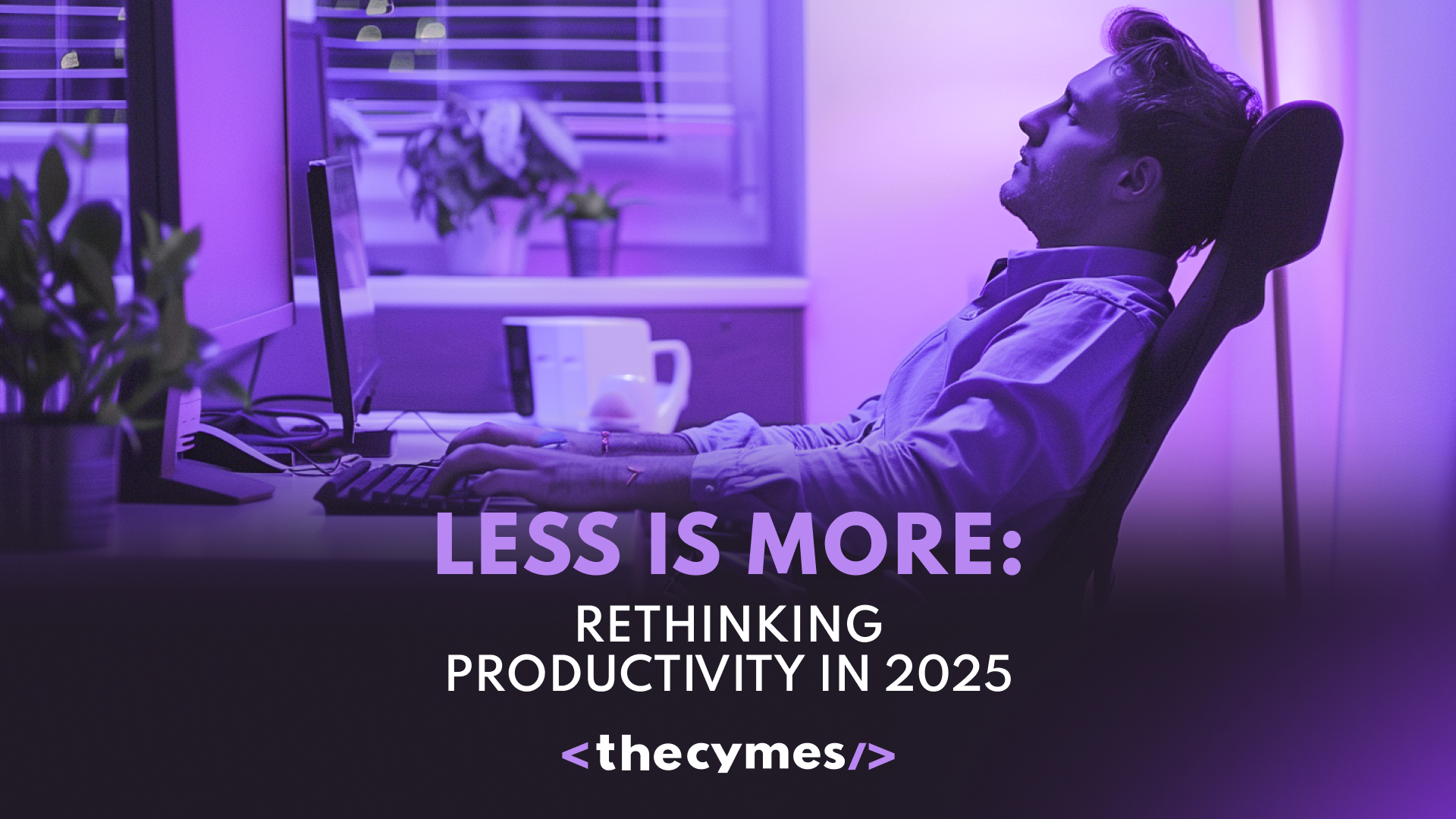
In today’s business world, a curious contradiction has emerged: we measure productivity by speed, busyness, and sheer volume, yet our most meaningful results often come from doing less, but doing it with greater intention.
We live in an economy that accelerates by the day – markets shift overnight, Slack never sleeps, and AI tools promise instant efficiency. But the human mind hasn’t evolved at the same speed. Our attention spans, learning capacities, and emotional bandwidth are still human.
So what happens when the world moves too fast for our minds?
The speed trap
“Faster” still carries an aura of progress. Packed calendars and back-to-back meetings look efficient – but recent data suggests otherwise.
The 2024 State of the Workplace report by ActivTrak found that while employees finished workdays more quickly (the average day shortened by 15 % between 2021 and 2023), this did not correspond with more meaningful work or deeper focus time.
Meanwhile, Gallup’s 2024 report showed global engagement slipping from 23 % to 21 % – one of the steepest declines in a decade.
People are doing more things, faster, but they aren’t more engaged, innovative, or fulfilled. Perhaps, the very rush to perform is undermining the ability to be effective.
Quality – Quantity
True productivity is not about doing more, but about doing better. Organisations that shift from “how many” to “how meaningful” rediscover what progress really is.
A Stepstone Group survey (2023) found that only 25 % of employees feel emotionally committed to their employer. When commitment drops, busyness becomes a poor substitute for purpose. Productivity 2.0 means: fewer priorities, deeper focus, clearer impact.
Quality work requires clarity of purpose, alignment with strengths, and room to think – not just an ever-expanding to-do list.
Recovery as a strategic resource
One of the most counterintuitive truths in new productivity research: downtime matters.
A 2024 University of Notre Dame study found that employees who tried to suppress boredom during repetitive work ended up with lower performance later. Pushing through fatigue and monotony doesn’t toughen us — it drains our cognitive fuel.
Rest, pause, reflection: not luxuries, but leverage. In the era of acceleration, recovery becomes the stabiliser – the hidden system that protects creativity and attention.
The hidden value of boredom
Yes, boredom deserves its seat at the table. When the mind is under-stimulated, it signals that something’s off, a mismatch between meaning and activity. Instead of filling every idle second, allowing mental stillness can unlock creative recombination.
The same Notre Dame research showed that boredom, when followed by reflection, actually boosted innovation. Empty space isn’t waste – it’s the incubation zone of ideas.
The new productivity triad
Three principles now define sustainable performance:
- Focus – Prioritise fewer initiatives and defend deep-work capacity.
- Quality – Measure impact, not output. Replace “We did X tasks” with “We changed Y outcome.”
- Recovery – Embed rest, reflection and rhythm as strategic assets, not optional perks.
From theory to practice
- Replace a series of 60-minute meetings with one 15-minute alignment session.
- Introduce no-meeting or digital-silence hours — a growing demand across industries (IT Pro 2024).
- Track engagement as a business KPI: not just how much people work, but how they feel while working.
- Encourage micro-pauses and reflective check-ins to reset attention and prevent cognitive burnout.
When teams protect attention, they amplify creativity. When leaders model boundaries, the organisation gains endurance.
The leadership shift
The modern leader’s job is not to make people busier – it’s to make space for them to think clearly. Great leadership now means protecting focus like capital, cultivating psychological safety, and reminding teams that speed without alignment is chaos.
The question is no longer “How busy are we?”, it’s “How aligned, rested, and ready to create are we?”
Final word
In a climate obsessed with acceleration, the real edge belongs to those who can pause intelligently. Productivity today is about doing less, better – with purpose, rhythm, and clarity. The future will not reward the fastest movers, but those who know when to slow down, breathe, and act with full attention.
In the age of constant acceleration, stillness is a strategy.